
BW-Ex-4: A Dual Agonist Peptide Reimagining Diabetes and Obesity Therapy
Research Retreat Spotlight
6/1/20251 min read
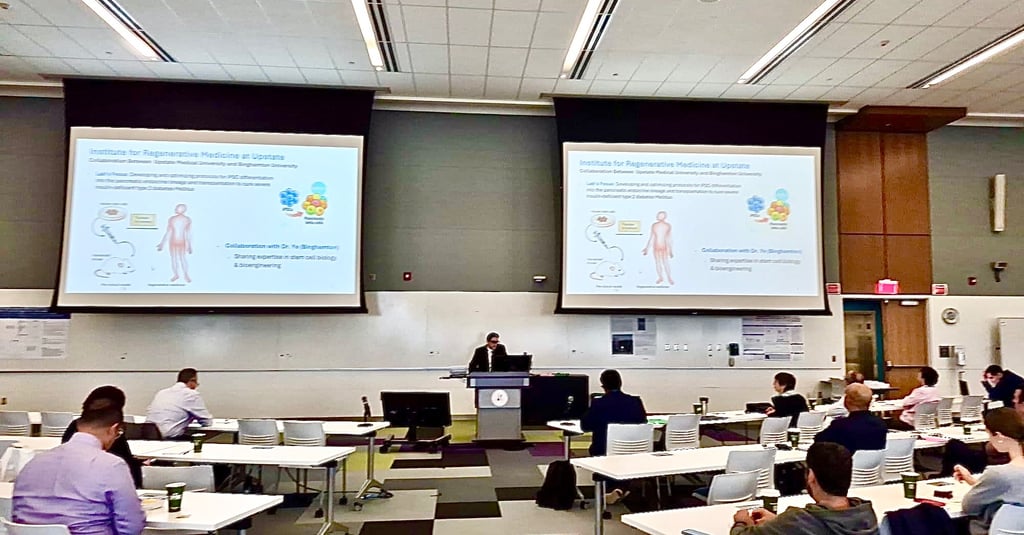
At today’s Department of Medicine Research Retreat, our Principal Investigator, Dr. Tuncay Delibasi, delivered an outstanding presentation introducing a first-in-class dual agonist peptide, BW-Ex-4, designed to target diabetes and obesity through a novel mechanism of action.
Built by combining Black Widow venom–derived GLP-1 analogs with Exendin-4, BW-Ex-4 activates two GPCR targets:
• GLP-1R, to enhance insulin secretion
• CIRL1 (an adhesion GPCR), to promote islet cell adhesion, maturation, and survival
This hybrid strategy offers not just metabolic benefits (glucose tolerance, weight loss) but also structural and anti-inflammatory advantages essential for the long-term function of stem cell–derived islets.
Dr. Delibasi’s talk outlined two main research aims:
1. Testing BW-Ex-4 on iPSC-derived islet function and survival under metabolic stress
2. Evaluating CIRL1-mediated cell adhesion in 3D islet cluster formation
His proposal—selected as a finalist among the top five submissions—has drawn attention for its translational potential and its alignment with the future of personalized islet-based therapies.
BW-Ex-4 represents a promising leap forward in regenerative endocrinology, merging peptide design, stem cell technology, and GPCR biology into a single therapeutic platform.
We’re excited to see where this journey leads, and we are proud to have Dr. Delibasi and our team at the forefront of next-generation diabetes solutions.
Connect
Get in touch for collaboration and inquiries.
Explore
Discover
contact@isletnexus.org
+1234567890
© 2025. All rights reserved.
This website is independently maintained for informational purposes regarding the research activities of the Delibasi Lab and is not an official website of SUNY Upstate Medical University or any other university. The content is provided for informational purposes only and does not represent official institutional positions. All trademarks and institutional names belong to their respective owners.